

Suggestions alone don’t draw a clear line between mindfulness and hypnosis, especially when meditation is guided. In comparing mindfulness vs hypnosis for stress, the more useful distinction is often the aim: mindfulness practises noticing present-moment thoughts and sensations without judgement, while clinical hypnosis uses focused attention and suggestions for a therapeutic purpose. Both may support stress management, but they approach the mind differently.
It makes sense to wonder whether hypnosis means giving up control or mindfulness is simply a way to quiet the mind. Neither approach is quite that simple. Understanding how attention, awareness and suggestion work can make the choice feel less mysterious and more personal.
This article explains what each method involves, where the approaches overlap, and how clinical hypnosis may fit when stress feels persistent or tied to particular patterns. You’ll also find a practical guide to help you consider which approach may suit your needs.
Key Takeaways
- Understand how therapist-guided hypnosis and self-directed mindfulness differ in the way they use attention and awareness.
- Match the approach to your aim: focused support for a particular stress pattern or an ongoing practice of present-moment awareness.
- Explore how either method may help with stress and anxiety, and what a guided session can involve.
- Consider stress management hypnotherapy when you want structured support to work with recurring stress responses.
How does Hypnosis for Stress Management work?
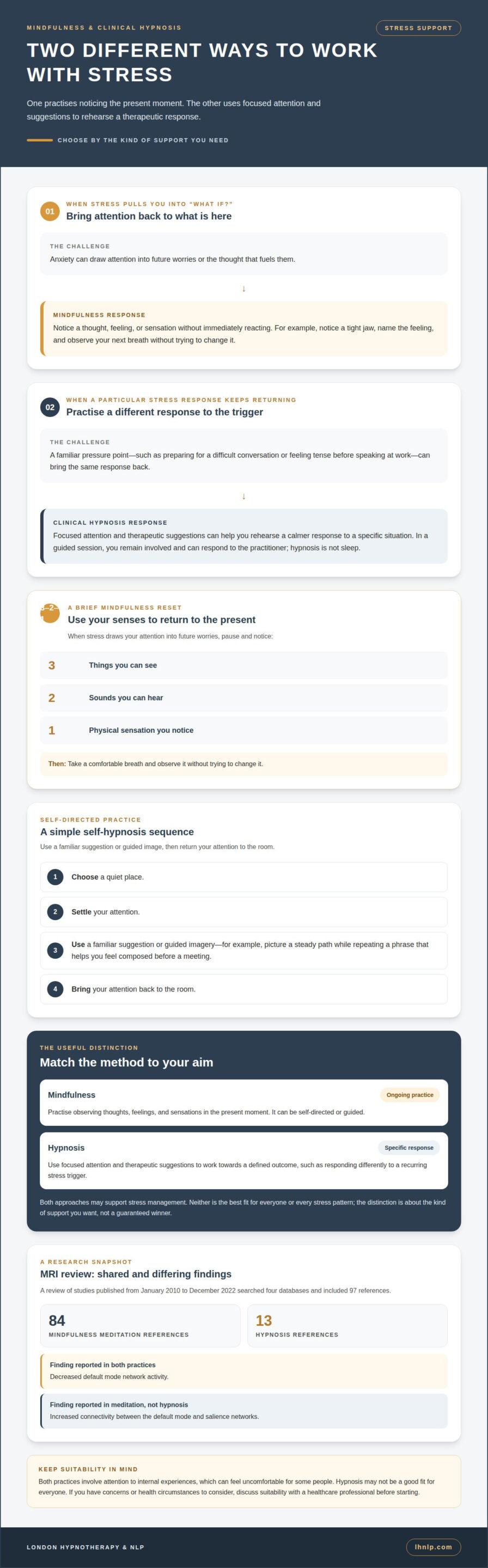
Hypnosis uses focused attention and therapeutic suggestions to explore thoughts, feelings and responses linked with stress. During a guided session, attention may turn inward, with fewer external distractions competing for notice. This isn’t sleep: you remain involved and can respond to the practitioner. Suggestions might help you practise a calmer response to a familiar pressure point, such as preparing for a difficult conversation.
A practitioner can shape the session around a clear aim and your emotional experience. They may invite you to discuss a stressful situation, then use imagery or suggestions to rehearse a different response. You can practise afterwards by revisiting a calming image or suggestion between sessions. Feeling comfortable with your practitioner can make it easier to engage with the process.
Self-hypnosis follows a simple sequence: choose a quiet place, settle your attention, use a familiar suggestion or guided imagery, then bring your attention back to the room. For example, you might picture a steady path while repeating a phrase that helps you feel composed before a meeting. Guided meditation also uses attention and imagery, but usually emphasises present-moment awareness rather than therapeutic suggestion.
For a beginner mindfulness exercise, pause and name three things you can see, two sounds you can hear and one physical sensation you notice. Then take a comfortable breath and observe it without trying to change it. This brief sensory exercise can bring your awareness back to the present when stress draws your attention into future worries.
If you’re unsure whether hypnotherapy is suitable for you, discuss it with a healthcare professional before starting. Hypnosis may not be a good fit for everyone, so consider any personal concerns or health circumstances first.
| Option | Guidance | Main focus | Example |
|---|---|---|---|
| Therapist-guided hypnosis | Practitioner-led | Therapeutic suggestion | Rehearsing a calmer response |
| Self-hypnosis | Self-directed | Familiar suggestion or imagery | Preparing for a meeting |
| Mindfulness meditation | Self-directed or guided | Present-moment awareness | Noticing breath and sounds |
Choose guided hypnosis when you want structured support for a specific stress response; try mindfulness when you want to practise noticing the present moment.
Hypnosis for outcomes vs meditation for long-term goals
Both practices can change how people relate to mental experiences, but their aims may differ. You might use hypnosis to work towards a defined outcome, such as responding differently to a recurring stress trigger, while meditation can help build an ongoing habit of observing thoughts and sensations.
Differences Between Hypnosis and Meditation
Meditation directs attention towards observing thoughts, feelings or sensations; hypnosis uses focused attention and suggestions for a therapeutic purpose. The distinction isn’t simply whether someone gives guidance: guided meditation can include suggestions, too. Consider the aim instead. If you’re practising noticing tension without reacting, you’re using meditation; if you’re rehearsing a calmer response to a specific situation, hypnosis may suit you.
MRI Research on Mindfulness and Hypnosis
An MRI review examined studies published from January 2010 to December 2022, searching four databases and including 97 references: 84 on mindfulness meditation and 13 on hypnosis. It identified some shared and some differing brain findings, including decreased default mode network activity in both practices. Increased connectivity between the default mode and salience networks appeared in meditation findings, but not hypnosis findings. Ericksonian hypnosis may use indirect suggestions, but that technique should not be confused with a distinct MRI result.
Timeframes and Possible Side Effects
There’s no single timeframe for noticing a change. Progress depends on your aim, how regularly you practise and whether the approach fits your stress pattern; a defined outcome and a long-term meditation habit are different measures. Both practices involve attention to internal experiences, which can feel uncomfortable for some people. Hypnosis may not be a good fit for everyone, so discuss suitability with a healthcare professional if you have concerns.
Choose hypnosis when you want to focus on a specific response; choose meditation when you want to cultivate a continuing practice of observation. For a structured approach to hypnotherapy and related treatments, explore the available options.
Mindfulness and hypnosis for stress and anxiety
Both approaches can support stress reduction, but they work with attention differently. A mindfulness vs hypnosis for stress comparison is most useful when it focuses on the kind of support you need.
Managing Anxiety and Stress
Mindfulness can help you recognise anxiety as it arises, rather than immediately following the thought that fuels it. Try noticing a tight jaw, naming the feeling and observing your next breath. Hypnosis takes a different route: focused attention and suggestions can address a recurring response, such as tension before speaking at work. Both can support awareness, but one emphasises observing experience and the other therapeutic suggestion.
Effectiveness for Stress
Neither approach is the best choice for everyone or every stress pattern. Mindfulness meditation is associated with reduced stress symptoms and anxiety; hypnosis is also associated with reduced stress and anxiety. The useful distinction is the aim: choose mindfulness to practise noticing thoughts and feelings in daily life, or consider hypnosis when you want to work on a particular response. The mindfulness vs hypnosis for stress decision is about fit, not a guaranteed winner.
Mindfulness and Stress Reduction
Mindfulness may reduce stress by helping you notice thoughts, feelings and sensations in the present moment without judgement. Instead of treating “I can’t manage this” as a fact, observe the thought and bring your attention back to what is happening now. This can interrupt the mental chain between a stressful event and an automatic reaction. Practising this shift can also help you recognise your own patterns of thought and response.
Stress and anxiety can overlap with low mood, but the approaches have distinct roles. NICE recommends Mindfulness-Based Cognitive Therapy to help prevent relapse in recurrent depression. That recommendation is specific to relapse prevention; it doesn’t mean mindfulness or hypnosis replaces care for depression. Use this distinction to choose a practice for stress while keeping other emotional needs in view.
How clinical hypnosis may support stress management
Clinical hypnosis may support stress management by helping someone work with a specific pattern, rather than trying to silence every thought. Focused attention creates space to consider suggestions about a different response. For example, someone who tenses before speaking in meetings could mentally rehearse entering the room, settling their breathing, and beginning calmly.
A useful session starts with a clear example of when stress appears. You and the practitioner can discuss the trigger, the thoughts that follow and the response you want to develop. Suggestions can then relate directly to that moment, such as feeling steadier while preparing for a difficult conversation. This keeps the therapeutic work connected to daily life.
Relaxation techniques can help direct attention inward, but relaxation isn’t the whole purpose. You might picture a familiar, peaceful place, then practise imagining the stressful situation from that calmer state. Connecting imagery with a real-life trigger gives the exercise a practical focus. The aim is to explore a different response, not erase the memory.
Progress also involves noticing what happens outside sessions. You could observe whether you pause before reacting to a tense email or recover more easily after an unexpected change. These examples give you something concrete to revisit and can help shape later sessions around situations that continue to affect your mental health and wellbeing.
Between sessions, you can practise a remembered suggestion or calming image when a familiar stress cue appears. This may help you develop a steadier response over time, while mindfulness can complement the practice by bringing your awareness back to the present. Neither technique replaces appropriate mental health care when distress is severe or persistent.
The practical takeaway is to link each technique to a real situation, then notice how your response unfolds. If you want structured support with stress, explore guided stress support.
London Hypnotherapy & NLP: Stress Management
London Hypnotherapy & NLP offers Stress Management for people seeking guided support with recurring stress patterns. Sessions can focus on situations that trigger tension and the responses you’d like to develop. If anxiety is also a concern, Hypnotherapy for Anxiety may be relevant.
Consider guided support if self-directed mindfulness feels difficult to maintain or stress keeps returning around a particular situation. Hypnotherapy offers a structured space to focus on that pattern and explore alternative responses. It isn’t a replacement for other care you may need, but it can form part of a considered approach to wellbeing.
The next step is to decide what you’d like help with, such as stress before work conversations or anxiety in everyday situations. Contact London Hypnotherapy & NLP to discuss stress management support.
Choose a next step that feels workable
The question of mindfulness vs hypnosis for stress can be a useful prompt: what kind of support would help you engage with change? Start by noticing which situations leave you feeling most unsettled, then consider whether personal practice or guided support feels more practical. There’s no need to turn that choice into a test of willpower. A sustainable next step is one you can approach with curiosity and honesty.
If your goals extend beyond stress, London Hypnotherapy & NLP also offers Hypnotherapy for Anxiety, Hypnotherapy for Weight Loss and Hypnotherapy for Smoking Cessation. Each concern can call for a different focus, shaped around the change you want to work towards.
Contact London Hypnotherapy & NLP to discuss support that fits your goals. Take the next step at your own pace; meaningful change can begin with a clear conversation.
Frequently Asked Questions
Are suggestions really the distinguishing feature?
No. Suggestions can appear in both hypnosis and guided meditation, so their presence alone doesn’t define the practice. Consider the session’s purpose and structure: clinical hypnosis uses focused attention and therapeutic suggestions towards a specific aim, while mindfulness centres on observing experience. For example, a guided meditation might suggest imagining a peaceful place without becoming hypnotherapy.
Can You Use Both?
Yes, you can use mindfulness and hypnotherapy as complementary practices. For instance, mindfulness might help you notice rising tension during a commute, while a hypnosis session explores a recurring response linked to a particular situation. Keep each practice’s aim clear, and discuss combining approaches with a relevant health professional if you’re receiving care for ongoing distress.
Is Mindfulness a Form of Hypnosis?
No. Mindfulness isn’t a form of hypnosis, although both can involve focused attention and inward awareness. In mindfulness, you practise noticing thoughts or sensations without judgement; hypnosis uses therapeutic suggestions for a defined purpose. A quiet, absorbed feeling during meditation doesn’t by itself mean you’ve entered hypnosis. The method and intention matter more than how relaxed you feel.
How does hypnosis or hypnotherapy reduce stress?
Hypnotherapy may help by directing attention towards a stress response and using suggestions to rehearse a different way of meeting it. Imagine feeling tense before a difficult conversation: a session could help you picture approaching it with steadier breathing and clearer thoughts. The aim is to work with the pattern, not make stress vanish on command or remove your awareness.
What is the difference between mindfulness and hypnosis for stress?
Mindfulness builds the habit of noticing what is happening now, while hypnosis uses focused attention and suggestions towards a therapeutic aim. If a deadline triggers worry, mindfulness can help you recognise the worry without immediately following it. Hypnosis may focus on changing how you respond to that recurring trigger. The more useful choice depends on the kind of support you want.
What does research say about mindfulness and hypnotherapy for stress?
Research links both practices with potential benefits for stress, but the volume of published work differs. Research on mindfulness and hypnosis varies in scope, and publication volume alone does not show which approach works better. That difference reflects the amount of research, not proof that one approach works better. Study findings also don’t determine which method will suit a particular person.